
How Much It Costs to Run AC All Summer (2026 Breakdown)
Your air conditioner is the single biggest energy expense in your home from June through September. Here is what it actually costs, broken down by system type, and the formula to calculate your own number.
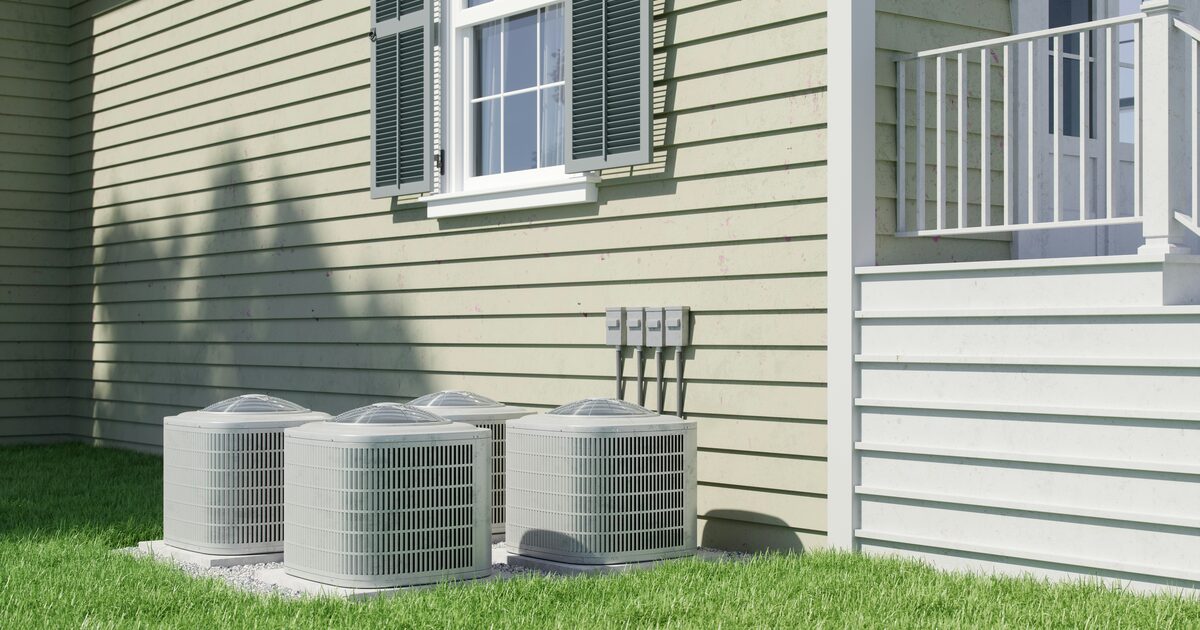
Summer is here, and so is the part of the year where your electric bill starts climbing. For most American households, air conditioning is the single largest energy expense between June and September. It accounts for roughly 46 percent of the average home's electricity use during those months, and in hot climates like Arizona, Texas, and Florida, that number can climb to 60 or 70 percent.
The National Energy Assistance Directors Association (NEADA) projects that the average U.S. household will spend about $778 on cooling this summer, up 8.5 percent from last year and 37 percent higher than 2020 levels. That works out to roughly $195 per month from June through September. But that is just the national average. Your actual cost depends on the type of AC you are running, how many hours per day it operates, your local electricity rate, and how well your home holds cool air.
We pulled the latest data on electricity rates, AC wattage by system type, and regional cost differences to give you a realistic picture of what your AC is costing you this summer, and what you can do about it.
The formula: how to calculate your AC cost
Before we get into the averages, here is the math so you can calculate your own number. Every AC cost comes down to one formula: watts times hours per day times days, divided by 1,000, times your electricity rate per kilowatt hour. That gives you the total cost for any period you want to measure.
For example, say you have a central AC system rated at 3,500 watts and it runs about 8 hours per day. Over a 30 day month at the national average rate of 18.05 cents per kWh, the math looks like this: 3,500 times 8 times 30, divided by 1,000, equals 840 kWh. Multiply 840 by $0.1805 and you get about $152 per month, or roughly $608 for a four month summer.
The two numbers that matter most in this formula are your system's wattage and how many hours it actually runs each day. A system in Phoenix running 12 hours a day costs 50 percent more than the same system in Nashville running 8 hours. Want to plug in your own numbers? Our appliance energy comparison calculator lets you compare running costs for different AC setups side by side.
AC costs by system type
Not all air conditioners cost the same to run. The type of system you have is the biggest factor in your monthly bill. Here is what each type typically costs per month based on 2026 electricity rates and normal summer usage.
Monthly AC cost by system type (2026 rates)
The range within each type comes down to three things: how hot it gets where you live, how many hours the system runs, and the efficiency rating (SEER) of your unit. A 10 year old central AC with a SEER rating of 13 costs significantly more to run than a new system rated at SEER 20 or higher, even though they cool the same space.
Mini splits stand out as the most efficient option per room. They avoid the energy losses that come with ductwork, which can account for 20 to 30 percent of a central system's energy use in older homes. If you are only cooling one or two rooms regularly, a mini split can cut your cooling bill dramatically compared to running central air for the whole house.
What the average summer electricity bill looks like
The average U.S. household electricity bill runs about $178 per month during the summer months (June through September), according to the latest EIA data. That is up from about $168 last year, driven by both rising electricity rates and hotter summers pushing AC usage higher.
Of that $178 monthly bill, roughly $80 to $100 is going directly to air conditioning. The rest covers your refrigerator, water heater, lighting, laundry, cooking, and electronics. But AC is the variable that makes summer bills spike compared to spring and fall, when the same household might pay $120 to $140 per month.
The national average electricity rate sits at 18.05 cents per kWh as of early 2026, with the average household consuming about 903 kWh per month. But rates vary enormously by state. California averages over 30 cents per kWh, while states like Idaho, Utah, and Oklahoma sit closer to 11 to 13 cents. That means the same AC system costs roughly three times as much to run in San Diego as it does in Oklahoma City.
Regional differences: why your neighbor's bill means nothing
Summer cooling costs are not evenly distributed across the country. A household in Phoenix that runs AC 14 hours a day for five months has a completely different cost profile than a home in Seattle that might only run AC for 6 weeks total. NEADA data shows that cooling costs in the South and Southwest run 40 to 60 percent above the national average, while the Pacific Northwest and northern states spend well below it.
New England is seeing some of the fastest increases right now, with summer bills rising about $13 per month compared to last year. That is largely driven by electricity rate increases rather than hotter temperatures. Meanwhile, the South Central region (Texas, Oklahoma, Louisiana) has always had high cooling costs, but relatively lower electricity rates partially offset the long cooling season.
Your local rate matters more than almost any other factor. If you are not sure what you are paying per kWh, check your most recent electric bill. It is usually listed on the first page. Once you know your rate, you can use our electricity cost calculator to see how your AC stacks up against everything else in your home.
The hidden cost: your AC is probably the wrong size
One of the biggest reasons people overpay on cooling is that their AC system is the wrong size for their home. An oversized unit cycles on and off too frequently, never properly dehumidifying the air and wearing out components faster. An undersized unit runs constantly without ever reaching the set temperature, burning through electricity all day.
The right size depends on your home's square footage, ceiling height, insulation quality, window count, and local climate. A properly sized system runs in efficient cycles, reaching the target temperature and shutting off, then cycling back on as needed. If your AC seems to run nonstop or kicks on and off every few minutes, sizing could be costing you 20 to 40 percent more than necessary.
Not sure if your system is sized correctly? Our BTU calculator can help you figure out how much cooling capacity your space actually needs based on room dimensions, insulation, and sun exposure. If the number does not match what your current system delivers, that mismatch is showing up on your bill.
8 ways to lower your summer AC bill
You cannot control electricity rates or the weather, but you can control how efficiently your home uses cooling. These eight strategies are ranked roughly by impact, starting with the changes that save the most money.
Raise the thermostat to 78 when home. The Department of Energy says every degree above 72 saves about 3 percent on cooling costs. Going from 72 to 78 saves roughly 18 percent. On a $778 summer cooling bill, that is about $140 back in your pocket. A ceiling fan makes 78 degrees feel like 72, and fans cost pennies per hour to run.
Use a programmable or smart thermostat. Setting the temperature to 85 while you are at work and letting it cool back to 78 before you get home avoids paying to cool an empty house for 8 to 10 hours a day. Smart thermostats learn your schedule and can save 10 to 15 percent on cooling costs automatically.
Seal air leaks around windows and doors. Gaps around windows, doors, and electrical outlets let cooled air escape and hot air infiltrate. A $5 tube of caulk and a $10 pack of weatherstripping can eliminate leaks that are adding 10 to 20 percent to your cooling load. Check for drafts by holding a lit candle near window edges and door frames.
Close blinds and curtains during peak sun hours. South and west facing windows are the biggest source of solar heat gain. Closing curtains or blinds during the hottest part of the day (noon to 5 PM) can reduce the cooling load on those rooms by 30 percent or more. Blackout curtains are even more effective.
Change your air filter monthly during summer. A clogged filter forces your AC to work harder, increasing energy consumption by 5 to 15 percent. Filters cost $5 to $15 each and take 60 seconds to swap. This is the easiest maintenance task with the biggest payoff.
Use fans strategically. Ceiling fans cost about 1 to 2 cents per hour to run, compared to 30 to 60 cents per hour for central AC. Running fans in occupied rooms and raising the thermostat 4 degrees achieves the same comfort level at a fraction of the cooling cost. Just remember that fans cool people, not rooms. Turn them off when you leave.
Schedule annual AC maintenance. A professional tune up ($75 to $200) that includes coil cleaning, refrigerant check, and electrical inspection keeps your system running at peak efficiency. Neglected systems lose 5 to 10 percent efficiency per year, which compounds into real money over a few summers.
Cook outside or use small appliances. Your oven generates 3,000 to 5,000 BTUs of heat that your AC then has to remove. Grilling outside, using a microwave, or relying on an Instant Pot during summer keeps heat out of the house and reduces your cooling load. This is a small but cumulative savings, especially if you cook daily.
When does upgrading your AC pay for itself?
If your central AC system is more than 10 years old, it is almost certainly running at a SEER rating of 13 or lower. Modern high efficiency systems start at SEER 15 and top units reach SEER 25 or higher. The difference in running cost between a SEER 13 and SEER 20 system is roughly 35 percent, which on a $200 per month summer cooling bill saves about $70 per month, or $280 per summer.
A new central AC system costs $3,500 to $7,500 installed, depending on size and efficiency rating. At $280 per year in savings, a mid range system pays for itself in roughly 15 to 20 years through energy savings alone. That math improves significantly if electricity rates keep rising (they have averaged 3 to 5 percent annual increases recently) or if your utility offers rebates for high efficiency equipment.
The better reason to upgrade is usually reliability and comfort. A system older than 15 years is living on borrowed time, and an emergency replacement in July costs more and gives you less choice than a planned upgrade in spring. If your system is approaching that age and your summer bills feel high, getting quotes now while contractors are not in peak season is the smart move.
The bottom line: what you will actually spend
For the average American household, summer cooling costs about $778 total from June through September in 2026. That breaks down to roughly $195 per month, though your first and last months of summer will likely be lower than the peak July and August bills.
Summer AC cost summary (June through September)
The most effective combination is raising your thermostat to 78, using fans in occupied rooms, changing your filter monthly, and sealing any obvious air leaks. Together, these four steps typically cut 15 to 30 percent off your cooling costs with minimal investment. On a $778 summer, that is $117 to $233 in savings, which more than covers the cost of a few filters, a tube of caulk, and a smart thermostat.
Run the numbers for your home
Use these calculators to figure out your actual cooling costs and whether your system is the right size.
Disclaimer: The costs and savings estimates in this article are based on national averages from the EIA, NEADA, and Department of Energy as of 2026. Your actual costs will vary based on your local electricity rate, home size, insulation quality, AC system type and age, climate, and usage patterns. This article is for informational purposes only and is not a substitute for a professional energy audit or HVAC consultation.