
How Much Does It Cost to Move in 2026? The Real Number
You budgeted for the movers. You forgot about the other $3,000. Here is every cost involved in moving, including the ones that show up after you have already signed the lease.
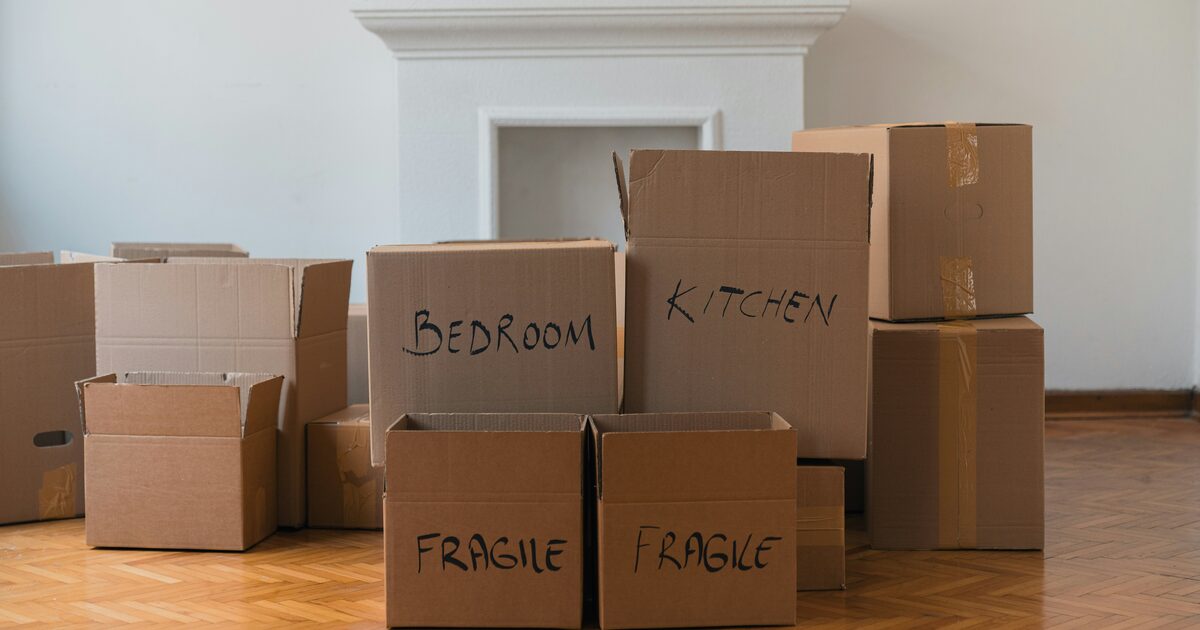
Moving is one of those expenses that almost everyone underestimates. You get a quote from a moving company or price out a truck rental and think that is the number. It is not. The truck or the movers are usually less than half of what you will actually spend. The rest goes to deposits, overlap rent, utility hookups, cleaning, tips, and a dozen small purchases that add up fast in the first week at your new place.
We pulled current 2026 pricing from moving companies, truck rental services, and real estate data to build a complete picture of what moving actually costs. Whether you are hiring professionals or doing it yourself, across town or across the country, here is the real math.
What a Local Move Costs in 2026
A local move is anything under 50 to 100 miles, depending on who you ask. Most moving companies define it by whether they can complete the job in a single day without overnight stops.
Professional movers charge $40 to $80 per mover per hour in standard markets. In expensive cities like New York, San Francisco, and Los Angeles, rates run $80 to $150 per mover per hour. Most local moves use a crew of two to four people.
Here is what that looks like for common home sizes in a mid-cost market:
Studio or one-bedroom: A two-person crew typically finishes in two to three hours. Total cost runs $260 to $550, not including tips.
Two to three bedrooms: A three-person crew working four to six hours. Expect $800 to $2,200 depending on how much furniture you have and whether there are stairs involved.
Four bedrooms or larger: A four-person crew, six to eight hours, sometimes spilling into a second day. Total runs $2,200 to $5,500 before packing services.
Add packing services and the price jumps 30 to 50 percent. Full packing for a three-bedroom house typically adds $500 to $1,500 on top of the base move.
Long-Distance Moves: A Different Pricing Model
Long-distance movers do not charge by the hour. They charge by weight and distance, which means your quote depends on how much stuff you own and how far it is going. The average long-distance move for a two to three bedroom home costs $3,060 to $5,280 in 2026, based on current industry data.
That number can swing significantly depending on your situation. A one-bedroom apartment moving 500 miles might cost $1,500 to $2,500. A four-bedroom house going coast to coast can hit $8,500 to $16,900, especially if you add packing, auto transport, or storage at either end.
One thing worth knowing: moving company pricing has climbed roughly 21 percent since 2023, largely driven by fuel costs. The steepest increases have hit the West Coast, particularly California, Oregon, and Washington. If you got a quote from a friend who moved two years ago, adjust that number upward.
The DIY Route: Truck Rental Costs
Renting a truck yourself is the most common way to cut moving costs, but the sticker price is misleading. The base rate you see online is rarely what you end up paying.
Local truck rentals run $175 to $590 depending on truck size and distance. U-Haul starts at about $20 to $40 per day plus $0.59 to $0.99 per mile. Budget Truck tends to be cheapest for local moves at around $28 per day plus $0.47 per mile.
Long-distance truck rentals cost $1,200 to $3,000 for a 1,000-mile move. Penske and Budget typically offer flat rates that include unlimited miles on long-distance rentals, while U-Haul charges per mile on most routes.
Here is where it gets deceptive. U-Haul's actual final cost averages about 60 percent higher than the initial online quote once you add mileage overages, insurance, environmental fees, fuel charges, and taxes. A quote that says $150 turns into $240. A quote that says $1,500 turns into $2,400. Budget for the inflated number, not the teaser.
You will also need supplies the truck rental does not include: furniture pads ($10 to $20 per dozen to rent), a dolly ($10 to $15 per day), and boxes and tape ($50 to $150 depending on your home size). If you are driving a 26-foot truck for the first time, add the cost of fuel. Those trucks get 8 to 12 miles per gallon, and at $4.50 per gallon in May 2026, a 1,000-mile drive burns through $375 to $560 in gas alone. We broke down how rising gas prices are hitting everyday budgets if you want the full picture on fuel costs right now.
The Hidden Costs That Double Your Budget
This is where most moving budgets fall apart. The truck or the movers are the line item you plan for. Everything below is the line item you do not.
Overlap rent or mortgage. Unless your move-out and move-in dates line up perfectly, you are paying for two places at once. Even one month of overlap on a $1,800 apartment adds $1,800 to your moving cost. Two weeks of overlap is still $900 you were not planning to spend.
Security deposit and upfront rent.If you are renting, most landlords require first month's rent plus a security deposit at signing. Some require last month's rent too. On a $1,800 apartment, that is $3,600 to $5,400 due before you even own a key. You may eventually get your old deposit back, but not before you need the new one.
Utility setup fees. Electricity, gas, water, internet, and trash service all need to be connected at the new place. Expect $200 to $500 in transfer and connection fees. Internet installation alone can run $50 to $150 depending on your provider.
Cleaning costs. Your old place needs to be cleaned to get your deposit back. Professional deep cleaning runs $150 to $400 for a two to three bedroom apartment. You can do it yourself, but it takes a full day when you are already exhausted from moving.
Tipping movers. If you hire professionals, tipping is expected. The standard is $20 to $60 per mover for a full day, or roughly $4 to $5 per mover per hour. A four-person crew working eight hours at $5 per person comes to $160 in tips. For a big or particularly difficult move, some people tip 15 to 20 percent of the total bill.
Building and parking fees. Apartment buildings often charge move-in fees, elevator reservation fees, or require a refundable damage deposit. These range from $100 to $500. Parking permits for the moving truck can add another $25 to $75 in cities where street parking requires a permit.
Replacement purchases. This is the sneakiest cost of all. Your old curtains do not fit the new windows. Your couch does not fit through the door. You need new shower rods, a different size rug, extra shelving, cleaning supplies for a different type of flooring. These purchases trickle in over the first two weeks and routinely add $200 to $800.
Moving Insurance: What You Are Actually Covered For
Every moving company is required to offer basic liability coverage called released value protection. It is free. It is also nearly worthless. Under released value, the company is only liable for $0.60 per pound per item. If movers damage your 50-pound coffee table worth $1,000, they owe you $30.
Full value protection is the upgrade. It requires the mover to repair, replace, or reimburse the current value of any damaged item. It typically costs about 1 percent of the total estimated value of your belongings. If you declare $50,000 in household goods, expect to pay around $500 for full coverage.
For DIY moves, your homeowner's or renter's insurance may cover belongings in transit, but check the policy. Many exclude damage during a move. The truck rental company will also offer damage waivers for the vehicle itself, usually $15 to $30 per day.
Three Real Moving Scenarios With Full Costs
Here is what moving actually costs when you add everything up, not just the movers or the truck, but the complete picture.
Scenario 1: Local apartment move, DIY. A one-bedroom apartment moving 15 miles across town.
Truck rental: $200. Fuel: $30. Dolly and blanket rental: $30. Boxes and tape: $60. Pizza and drinks for friends who helped: $50. Cleaning old apartment: $200. Utility transfers: $250. New apartment security deposit: $1,800. Replacement purchases (shower curtain, new blinds, cleaning supplies): $150. Total: roughly $2,770.
Most people budget about $300 for this move. The real number is closer to $2,800 because of the deposit and utility costs.
Scenario 2: Local house move, hired movers. A three-bedroom house moving 20 miles.
Movers (3-person crew, 6 hours at $55/hr per mover): $990. Packing materials: $120. Tips: $120. Cleaning old house: $300. Utility setup: $350. Overlap mortgage (one month): $2,200. Move-in repairs and replacement items: $400. Total: roughly $4,480.
The movers were under $1,000. Everything else was $3,500.
Scenario 3: Long-distance move, 1,200 miles, hired movers. A two-bedroom apartment moving from Phoenix to Dallas.
Full-service movers: $4,200. Full value insurance (1% of $40,000): $400. Tips: $200. Flight to new city: $250. Two nights hotel while waiting for delivery: $300. First month rent plus deposit: $3,200. Utility connections: $400. New furniture (items that did not survive the move): $500. Pet transport or boarding: $200. Total: roughly $9,650.
That is nearly $10,000 for a two-bedroom apartment. The movers were $4,200. Everything else was another $5,400 on top of that. If you are planning a long drive to your new city instead of flying, the gas and lodging costs shift but do not disappear.
7 Ways to Spend Less on Your Move
Move midweek and mid-month. Most leases start on the first of the month, so moving companies are slammed on the last weekend of every month. A Tuesday move in the middle of the month can be 20 to 30 percent cheaper simply because of lower demand.
Move in the off-season. September through April is the slow season for movers. If you have flexibility on timing, winter moves are significantly cheaper than the May through August peak.
Sell before you pack. Every pound you move costs money, especially on a long-distance move. That old dresser you have been meaning to replace? Sell it before the move and buy a new one at the destination. You might break even or come out ahead.
Get free boxes. Check local buy-nothing groups, Craigslist, liquor stores, and bookstores. Most will give you boxes for free. This saves $50 to $150 in packing materials.
Hire labor without the truck. Services like TaskRabbit and HireAHelper let you book hourly labor for $25 to $50 per person per hour. Rent a cheap truck yourself and hire two people just to load and unload. You get the DIY truck price with professional muscle.
Negotiate lease timing. Ask your new landlord for a move-in date that eliminates overlap rent. Even a few days of flexibility can save you hundreds. Some landlords will prorate the first month if you ask.
Photograph everything before you pack. Take photos of furniture, electronics, and anything valuable before it goes in the truck. If something arrives damaged, you have proof for an insurance claim. This does not save money upfront, but it can save you thousands if something goes wrong.
The Real Budget Rule for Moving
Industry estimates say to add 20 to 25 percent on top of your moving company or truck rental quote to cover hidden costs. That is a starting point, but it misses the biggest variable: housing overlap and deposits.
A more honest rule is this: take your mover or truck quote, then add two to three months of your housing payment on top of it. That covers the deposit at the new place, any overlap rent, and the utility setup fees. Then add another $500 for cleaning, tips, and the inevitable replacement purchases.
If you are renting a $1,800 apartment and your moving quote is $1,500, your real budget is not $1,500 or even $1,875 with a 25 percent cushion. It is closer to $5,600 to $7,400 once deposits, first month's rent, and all the extras are included.
The move itself is the smallest part. The cost of being in a new place is the rest.
All costs cited in this article reflect 2026 national averages and may vary by region, season, and provider. Moving company quotes should be obtained in writing. DoubtCalc provides educational information, not financial advice. Consult a financial advisor for guidance specific to your situation.