
How to Build a Charcuterie Board for Any Size Party
Most people either buy way too much and throw half of it away, or run out of cheese before the last guest arrives. Here are the exact numbers you need to get it right every time.
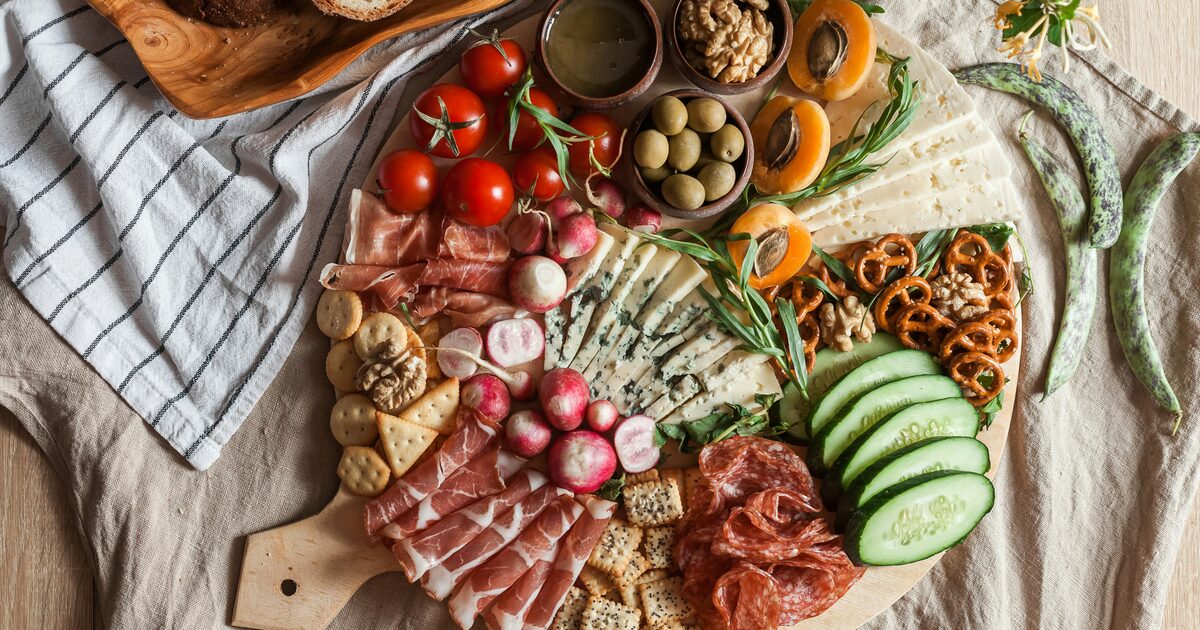
Summer entertaining season is here, and charcuterie boards have become the default party starter for everything from backyard cookouts to bridal showers. They look impressive, require zero cooking, and let guests graze at their own pace.
The problem? Nobody agrees on how much food to buy. You Google it and get answers ranging from “a few slices” to “one pound of meat per person.” That's an enormous range, and guessing wrong means either a sad, empty board by 7 PM or $80 worth of salami quietly expiring in your fridge the next morning.
So we did what we do at DoubtCalc: pulled actual data, talked to caterers, and built the math into a formula you can actually use. Let's break it down.
The per person formula
Here's the baseline most caterers and event planners agree on. These numbers assume the charcuterie board is an appetizer served before a main meal. If the board is the entire spread, increase everything by about 50%.
Cured meats
2 to 4 oz
per person
Cheese
2 to 3 oz
per person
Crackers and bread
3 to 5
pieces per person
Extras (fruit, nuts, olives)
2 to 3 oz
total per person
For a party of 10 as an appetizer, that means roughly 1.25 to 2.5 pounds of meat, 1.25 to 1.9 pounds of cheese, and about a pound of accompaniments total. Don't want to do the multiplication yourself? Our Charcuterie Board Calculator handles the math for any guest count instantly.
What goes on the board: the seven categories
A great charcuterie board hits seven categories. You don't need to go overboard within each one. Pick 2 to 3 options per category and you'll have plenty of variety.
1. Cured meats. Salami, prosciutto, sopressata, and coppa are the classics. Aim for at least 2 types with different textures: one thinly sliced (like prosciutto) and one with more chew (like a dry salami).
2. Cheeses. Variety is everything here. Pick one soft (brie or goat cheese), one semi-firm (gouda or havarti), and one hard (aged cheddar, Manchego, or Parmesan). Three cheeses is the sweet spot for most boards.
3. Crackers and bread. Include at least two styles: a plain, sturdy cracker for scooping soft cheeses, and something with flavor like rosemary crisps or a sliced baguette. Count on 3 to 5 pieces per person.
4. Fresh fruit. Grapes, berries, fig slices, and apple wedges all work well. Fruit adds color and balances the richness of the meats and cheeses.
5. Nuts. Marcona almonds, candied walnuts, or roasted pistachios. A small bowl goes a long way. About 1 ounce per person is plenty.
6. Olives and pickled items. Castelvetrano olives, cornichons, or pickled peppers add a tangy contrast to the richer components. One small bowl or about 1 ounce per person.
7. Spreads and condiments. Honey, whole grain mustard, fig jam, or pepper jelly. Two or three small ramekins give guests options without cluttering the board.
Board sizing: how big is big enough?
The most common mistake is using a board that's too small. Everything gets crammed together, guests can't reach anything, and it looks messy instead of abundant. A good rule of thumb: plan for about 20 to 25 square inches of board space per person.
For a small gathering of 4 to 6 people, a 10 by 14 inch board works well. For 8 to 12 guests, step up to a 12 by 18 inch board or a large round board about 18 inches across. For 15 or more people, use two separate boards placed at different spots on the table so guests don't crowd around one station.
No fancy wooden board? A clean cutting board, a sheet pan lined with parchment paper, or even a large plate works fine. The food is the star, not the surface.
The building order: a step by step approach
The order you place items on the board matters more than most people realize. Follow this sequence and your board will look polished without needing any design skills.
Step 1: Place the cheeses first. Cut wedges, cubes, or leave wheels whole, then space them evenly across the board. These are your anchor points and everything else gets built around them.
Step 2: Add small bowls for spreads and olives. Set ramekins of honey, mustard, or olives on the board next. These act as visual landmarks and create natural sections.
Step 3: Fan out the meats. Fold salami slices into halves or quarters, roll prosciutto into loose rosettes, and arrange them in clusters near the cheeses they pair well with.
Step 4: Fill gaps with crackers. Tuck crackers and bread slices into the empty spaces between meats and cheeses. Stand some upright for visual height.
Step 5: Scatter fruit, nuts, and garnishes. Use grapes, berries, and nuts to fill any remaining gaps. Fresh herbs like rosemary sprigs add color and make the board look more intentional.
Budget tiers: what to expect to spend
Charcuterie boards have a reputation for being expensive, but you can build a great one at almost any price point. Here's what each tier looks like per person.
Budget
$4 to $6
per person
Grocery store salami, cheddar, basic crackers, grapes
Mid-range
$8 to $12
per person
Imported salami, brie, gouda, artisan crackers, olives, honey
Premium
$15 to $20
per person
Prosciutto di Parma, aged Manchego, truffle honey, Marcona almonds
For a party of 12 at the mid-range tier, expect to spend $96 to $144 total. That's a lot less than most catered appetizer platters, which typically run $15 to $25 per person. Want a precise estimate for your guest count? The Charcuterie Board Calculator breaks it down by category and budget level.
Scaling for larger parties
Boards for 20 or more guests require a different strategy. One giant board sounds impressive but creates a bottleneck where guests crowd around a single spot. Instead, set up two or three smaller boards in different areas. This keeps traffic flowing and ensures everyone can actually reach the food.
For very large gatherings, consider making one board your “hero” display and supplementing with simple platters of sliced meats and cheeses placed around the room. You can also plan ahead by using our Party Food Calculator to figure out the right total food quantities across all your appetizers and sides.
If you're also handling drinks for the event, getting the alcohol quantities right is just as important. Our Wedding Alcohol Calculator works for any large party, not just weddings, and gives you a precise breakdown of wine, beer, and spirits by guest count.
Common mistakes (and how to avoid them)
Buying only one type of cheese. A board with nothing but cheddar cubes feels like a work meeting snack tray. Always include at least three cheeses with different textures: soft, semi-firm, and hard.
Skipping the crackers. Cheese and meat without a vehicle is awkward to eat. Guests end up stacking slippery salami on top of brie with nothing underneath. Buy more crackers than you think you need.
Serving everything ice cold. Cheese tastes dramatically better at room temperature. Pull the board out of the fridge 20 to 30 minutes before guests arrive. The exception: soft cheeses like brie can get too runny if left out too long on a hot summer day. Keep an eye on them.
No knives or serving utensils. Guests should not have to tear apart a block of cheese with their fingers. Place a small knife next to each cheese and a pair of tongs or toothpicks near the meats.
Overbuying because you panicked. This is the biggest one. The fear of running out leads people to buy 50% more than they need, especially on meats. Stick to the 2 to 4 ounces per person guideline and you will have the right amount every time.
Timing and prep logistics
You can assemble the full board up to 2 hours before serving. Arrange the meats, cheeses, fruits, olives, and spreads, then cover tightly with plastic wrap and refrigerate. Add the crackers and bread right before serving so they stay crisp.
Shopping can be done 2 to 3 days in advance for everything except fresh berries and sliced bread, which are best bought the day of. Pre-sliced deli meats from the grocery counter work perfectly and save prep time compared to whole cured links.
Leftover meats and hard cheeses keep well for 5 to 7 days in airtight containers. Soft cheeses should be used within 3 to 4 days. Repurpose extras into sandwiches, omelets, or pasta. Our guide to meal prepping costs has tips on getting the most value from your grocery spending if you want to stretch those leftovers further.
The bottom line
Building a charcuterie board is simpler than it looks. The secret is knowing your numbers: 2 to 4 ounces of meat, 2 to 3 ounces of cheese, and 3 to 5 crackers per person. Everything else is filling in the gaps with color, texture, and a few well-chosen accompaniments.
Whether you're hosting 4 friends on the patio or 40 guests at a summer party, the formula scales linearly. Buy what the math says, follow the building order, and resist the urge to panic-buy extra salami at the last minute. Your board (and your wallet) will thank you.
Ready to calculate exactly what you need? Try our Charcuterie Board Calculator and get a full shopping list for your next gathering in seconds.
Related calculators
- Charcuterie Board Calculator : Get exact quantities of meat, cheese, and extras by guest count
- Party Food Calculator : Plan appetizers, sides, and mains for any size event
- Wedding Alcohol Calculator : Figure out wine, beer, and spirits for large gatherings
- Recipe Scaler : Resize any recipe up or down for your party size
Sources & methodology: Per person quantities based on catering industry standards and USDA serving size guidelines. Cost estimates reflect 2026 national average grocery prices from major retailers. Board sizing recommendations follow standard event planning formulas. All figures are estimates, and your actual costs will vary based on location, ingredient quality, and store selection.